Correct battery placement is critical to ensuring safety, system performance, and long-term reliability. Following Australian Standards (AS/NZS 5139) helps reduce risks and ensures compliance with local electrical and fire safety codes.
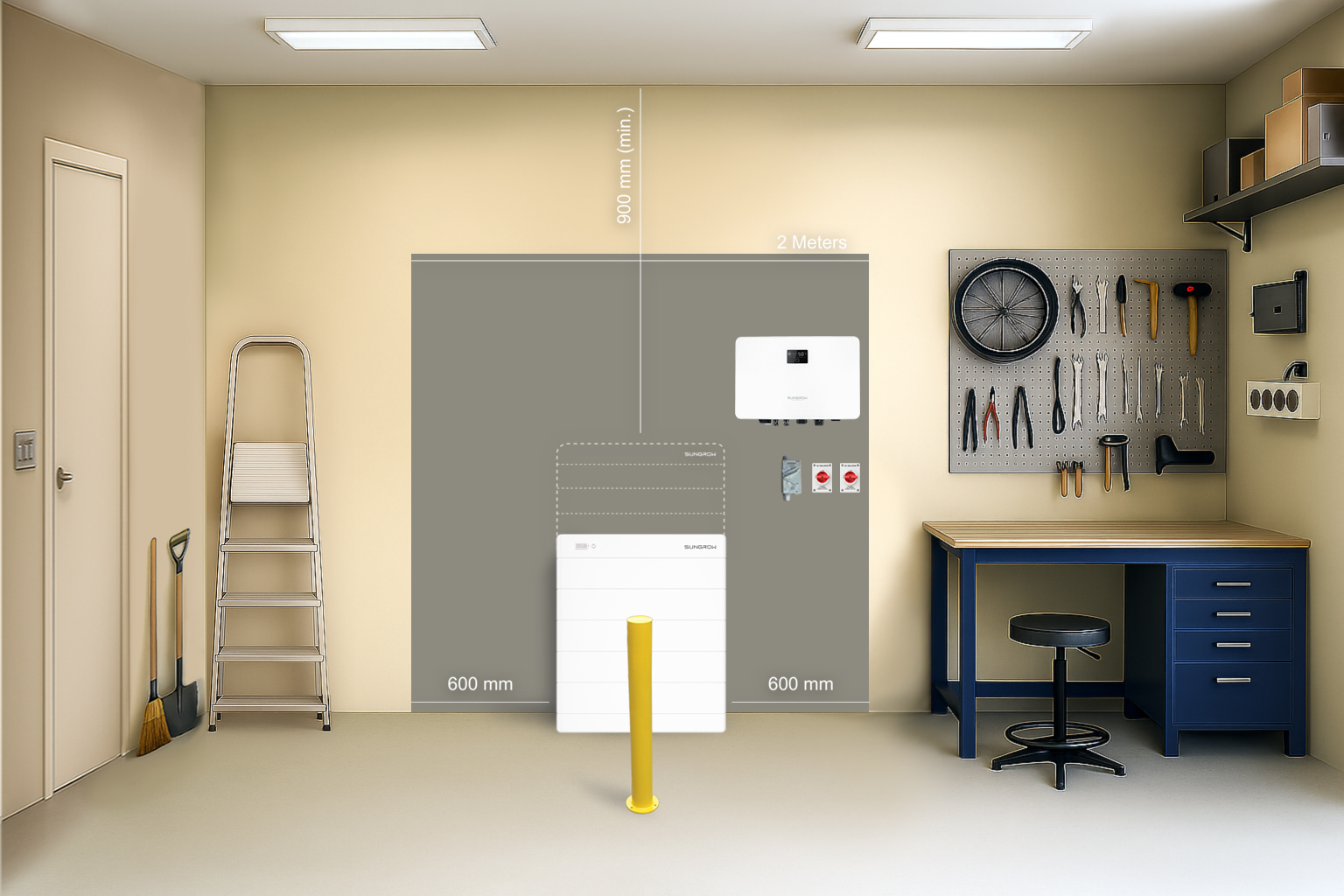
🏠 Indoor Battery Installation – Example: Garage
Suitable for:
Enclosed garages
Utility rooms
Dedicated battery cabinets
Non-habitable outbuildings
Benefits:
✅ Stable indoor temperature (ideal: 10–30 °C) ✅ Protection from rain, sun, and wind ✅ Lower risk of corrosion and weather damage ✅ Easier cable routing and inverter proximity
Installation Requirements
Minimum 600 mm side clearance (left and right)
Minimum 900 mm vertical clearance above the battery
Minimum 2 metres from any doors, windows, or openings
Protective bollard installed if located in vehicle-accessible area
Mounted on a non-combustible backing (e.g. cement sheet)
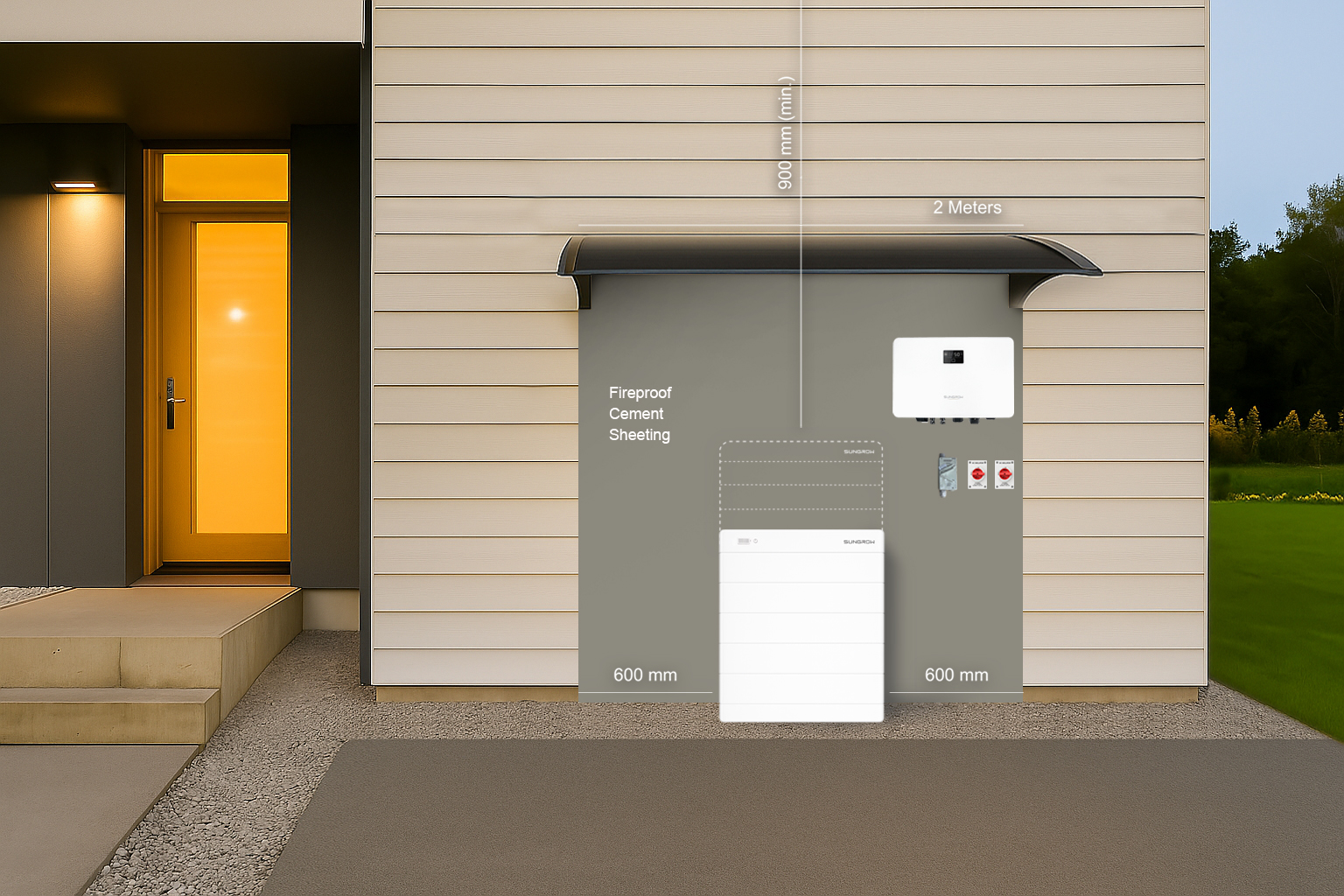
✅ Weatherproof rating (IP55/IP65 minimum) ✅ Installed on a fireproof cement sheeting backing ✅ Located under a weather canopy or awning ✅ Away from direct sun and moisture-prone zones
Installation Requirements
600 mm clearance on both sides
Minimum 900 mm clearance above the battery
At least 2 metres from any window, door, or ventilation opening