




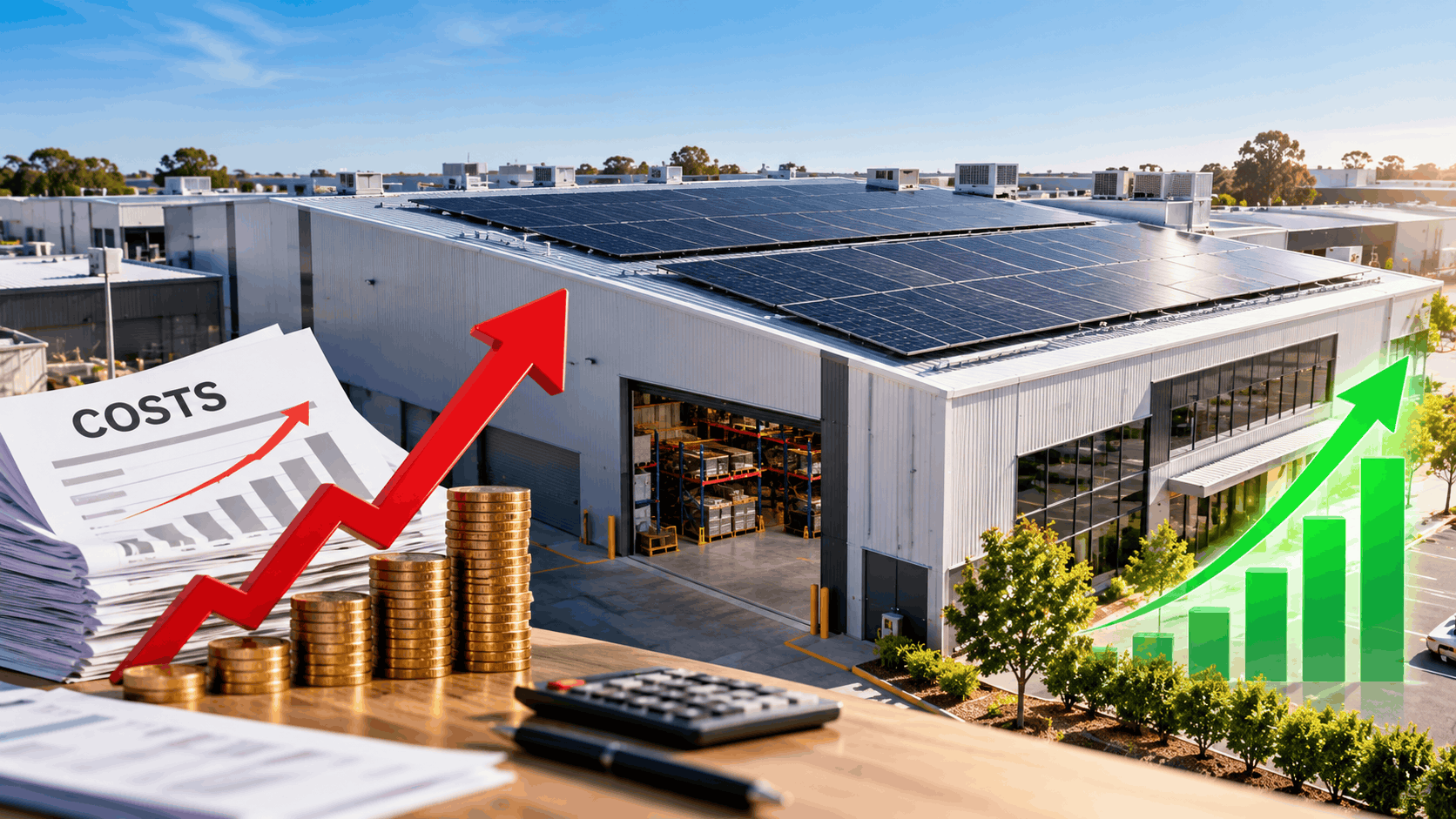
Rising production costs can put pressure on a business’s profitability. For manufacturers, warehouses and other energy-intensive businesses, electricity is an important operating expense.
Commercial solar for businesses can help reduce reliance on grid electricity by generating power on-site. However, the benefits depend on electricity usage, solar system design and when energy is consumed.
How Can Commercial Solar Help?
Reduce Grid Electricity Purchases
Businesses that use substantial electricity during daylight hours may be able to use solar power directly, reducing the amount of electricity purchased from the grid.
Support Growing Production
As production increases, electricity demand may rise. A properly designed commercial solar system can help supply part of that demand, subject to available roof space and system capacity.
Improve Energy Cost Planning
Generating some electricity on-site can help businesses manage part of their energy requirements. Actual savings depend on electricity tariffs, system costs, solar generation and ongoing expenses.
What Should Businesses Consider Before Installing Solar?
Before investing, businesses should review:
- Electricity consumption: Understand daily usage and peak demand.
- Operating hours: Solar is most useful when production overlaps with daylight generation.
- Roof space: Check suitability, shading and structural requirements.
- Future expansion: Account for planned machinery and increased production.
- Battery storage: Assess whether storing excess solar energy could suit your operating schedule.
Is Commercial Solar Right for Every Business?
Not necessarily. Businesses with high daytime electricity use may be well placed to benefit, while those using most of their power at night may need a different approach.
A site assessment and review of electricity bills can help determine whether commercial solar is financially suitable.
Key Takeaways
- Electricity can be a significant production expense.
- Commercial solar may reduce grid electricity purchases.
- System size should match business energy demand.
- Future production growth should be considered.
- Actual savings depend on site conditions and energy tariffs.
Conclusion
Commercial solar can help businesses manage electricity expenses as production costs increase. The first step is to understand your energy usage and assess whether a solar system fits your operating needs.
Looking to manage your business’s electricity costs? Talk to our expert by calling 1300 025 955 to discuss your commercial solar requirements.
Note: Services described are available only in states where Amazing solar Solutions holds the required licences.