





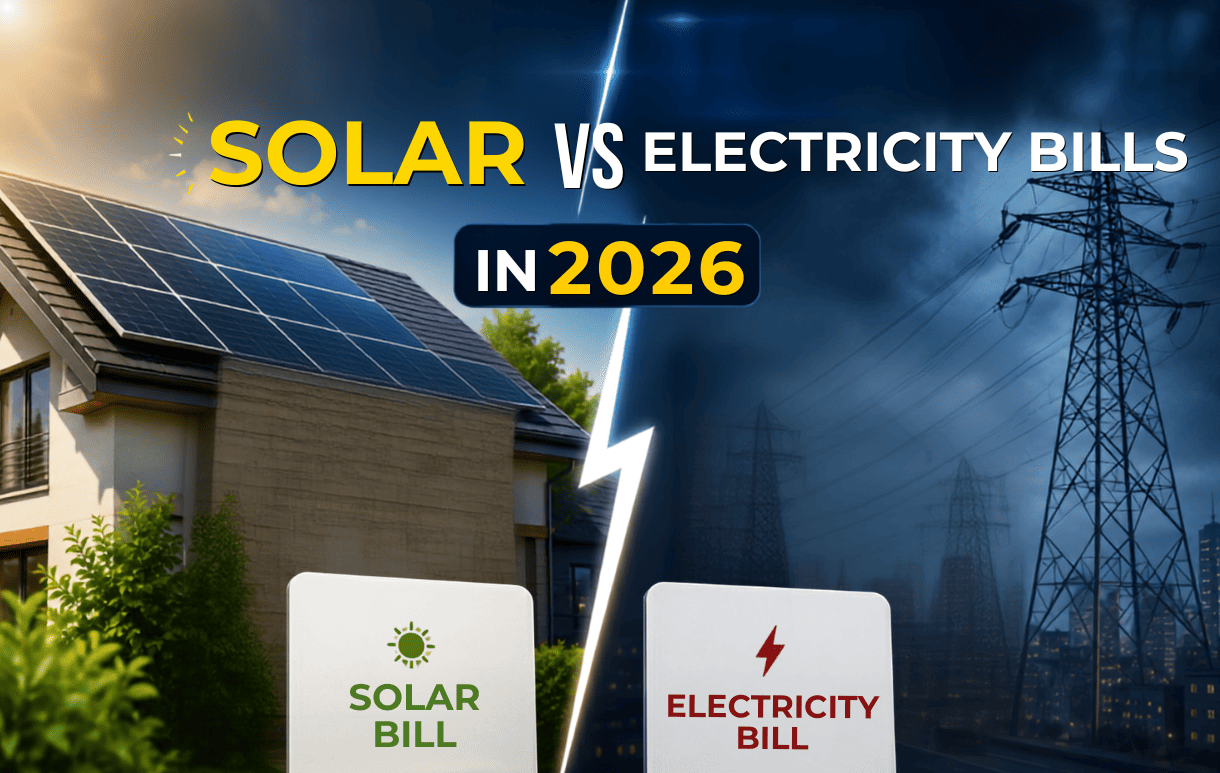
Electricity costs continue to be a major concern for Australian households, and many homeowners are asking an important question in 2026: is it better to continue relying on grid electricity or invest in solar? Understanding Solar vs Electricity Bills in 2026 can help families make informed decisions about future energy costs, long-term household planning, and greater energy independence.
In 2026, many Australian homeowners are comparing rising electricity expenses with the long-term value of solar systems. While electricity bills can fluctuate due to market conditions and household usage, solar allows households to generate their own energy during daylight hours and potentially reduce reliance on grid electricity. The right option depends on energy usage patterns, household goals, and future electricity needs.
Why More Homeowners Are Comparing Solar and Electricity Costs?
A few years ago, many households simply accepted electricity bills as a routine expense. Today, homeowners are taking a different approach.
Instead of only asking, “How much is my bill this month?”, many families are asking:
- How much electricity am I buying from the grid?
- Can I use more of my own energy?
- Will my electricity needs increase in the future?
- Can solar provide better long-term value?
As household energy consumption changes, more Australians are actively reviewing their options.
What Is Driving Electricity Costs in 2026?
Electricity prices can vary for several reasons.
Common factors include:
- Network infrastructure costs
- Wholesale energy market changes
- Household consumption increases
- Seasonal demand fluctuations
- Growing energy requirements
Many households are also using more electricity because of:
- Electric vehicle charging
- Working from home
- Home electrification
- Smart home technology
- Larger appliance usage
As energy needs grow, monthly electricity expenses may also increase.
Key Benefits Homeowners Consider With Solar
When comparing solar against long-term electricity costs, homeowners often focus on several factors.
Lower Reliance on Grid Electricity
Solar systems generate electricity during daylight hours, allowing households to use their own energy.
Better Control Over Energy Usage
Many homeowners value having greater visibility and control over where their energy comes from.
Battery Integration Opportunities
Adding battery storage may help households use more of their own solar energy.
Future Household Readiness
Solar can support future needs including:
- Electric vehicle charging
- Increased electricity consumption
- Home electrification upgrades
- Smart energy systems
Long-Term Planning
Many families increasingly view solar as part of a broader energy strategy rather than a short-term purchase.
Common Questions Homeowners Ask
Will electricity bills continue to increase in 2026?
Electricity prices can change due to market conditions, regulations, and household usage patterns.
Can solar completely remove electricity bills?
Not always. Results depend on system size, energy usage, battery storage, and grid consumption.
Is battery storage necessary?
Not every household requires a battery immediately. Suitability depends on energy habits and long-term goals.
Does solar work for households with high electricity usage?
Many households with higher usage explore larger solar systems or batteries to better support their energy needs.
Is solar a long-term investment?
Many homeowners view solar as a long-term energy decision that may provide value over many years.
What Homeowners Should Consider Before Making a Decision?
Before choosing a solar system, consider the following:
Household Energy Usage
Review:
- Daily electricity consumption
- Peak usage periods
- Seasonal energy needs
Roof Suitability
Roof orientation, available space, and shading can influence solar performance.
Future Plans
Consider future changes such as:
- Buying an electric vehicle
- Home renovations
- Growing family requirements
- Battery installation plans
Budget Considerations
The right system should align with both your financial objectives and long-term energy goals.
Key Takeaways
- Electricity costs remain an important concern for Australian households in 2026.
- More homeowners are comparing solar with long-term electricity expenses.
- Solar can help reduce reliance on grid electricity.
- Battery storage may improve solar self-consumption.
- Future energy demands are influencing solar decisions.
- Every household requires a system tailored to its needs.
- Long-term planning is becoming a major factor in energy decisions.
Conclusion
The conversation around energy is changing in 2026. Rather than simply accepting rising electricity costs, many Australian homeowners are exploring ways to gain greater control over their energy future. Understanding the differences between solar and ongoing electricity expenses can help households make more informed long-term decisions.
Want to understand whether solar could help reduce your household’s long-term energy costs? Talk to our experts on 1300 025 955 and discover a solar solution tailored to your home’s energy usage and future goals.