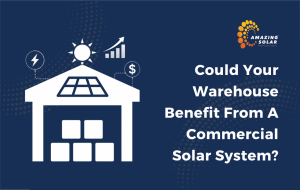



Warehouses and industrial buildings often have large roofs and significant electricity demand. From lighting and refrigeration to machinery and automated equipment, energy can be a major business expense.
For businesses considering solar for warehouses and industrial buildings, the opportunity can be significant. However, choosing the right system requires more than simply covering the roof with solar panels.
Quick Answer
Solar can be a suitable option for warehouses and industrial buildings with appropriate roof space and consistent electricity demand. Businesses should assess their energy usage, roof condition, daytime consumption, shading, future expansion and battery requirements before choosing a commercial solar system.
Why Warehouses and Industrial Buildings Can Be Good Solar Candidates?
Many warehouses and industrial facilities operate during daylight hours. This can allow businesses to use solar electricity while their operations are running. Solar generation could help power:
- Warehouse lighting
- Machinery
- Refrigeration
- Air conditioning
- Conveyor systems
- Office equipment
- Charging equipment
The suitability of solar depends on how much electricity the business uses and when that electricity is required.
What Should Businesses Consider?
1. Understand Your Electricity Usage
Start by reviewing your electricity bills and consumption patterns.
Look at:
- Daily energy consumption
- Peak demand periods
- Operating hours
- Seasonal changes
This information can help determine the appropriate solar system size.
2. Assess the Roof
Large roof space can be an advantage, but it needs to be suitable for solar installation. Consider:
- Roof condition
- Available installation area
- Roof orientation
- Shading
- Existing rooftop equipment
- Structural suitability
A professional site assessment is important before installation.
3. Think About Future Energy Demand
Industrial businesses can experience significant changes in electricity consumption. Future demand could come from:
- Business expansion
- New machinery
- Electric forklifts
- EV charging
- Additional refrigeration
- Longer operating hours
These plans should be considered when designing the system.
Does Your Business Need Battery Storage?
Not every warehouse or industrial building needs a battery.
Solar generation may already align well with businesses that consume significant electricity during the day.
However, battery storage may be worth considering when a business wants greater flexibility over when its generated electricity is used.
The decision should be based on actual energy consumption and operating patterns.
Common Questions Businesses Ask
Is a large warehouse roof automatically suitable for solar?
No. Roof condition, shading, structural suitability and energy requirements also need to be assessed.
Can solar power industrial machinery?
Potentially, yes. The system needs to be appropriately designed for the building’s electrical requirements and equipment.
Is a battery necessary for industrial solar?
Not necessarily. Businesses with strong daytime electricity demand may be able to use a significant amount of their solar generation directly.
Should businesses install the biggest system possible?
No. System size should be based on electricity consumption, available roof space and future requirements.
What Businesses Should Check Before Signing a Solar Contract?
Before choosing an installer, ask about:
- System design and capacity
- Solar panel and inverter brands
- Product and workmanship warranties
- Roof assessment
- Monitoring options
- Future battery compatibility
- Installation experience
- Ongoing support
Comparing these factors can help businesses look beyond the initial installation price.
Key Takeaways
- Warehouses and industrial buildings can be strong candidates for commercial solar.
- Large roofs provide potential installation space, but roof suitability matters.
- Daytime electricity consumption is an important consideration.
- Future business growth should influence system design.
- Batteries are not essential for every commercial solar project.
- Professional system design can help businesses choose the right solution.
Conclusion
Solar for warehouses and industrial buildings can provide businesses with an opportunity to generate electricity on-site and better manage their energy requirements. The right solution depends on the building, electricity usage, operating hours and future business plans.
Considering solar for your warehouse or industrial building? Talk to our experts on 1300 025 955 and discover a commercial solar solution designed around your business’s energy usage, property and future requirements.